Build. Power. Scale.

Where AI Lives, From Rack to Orbit

DatacentersX follows AI compute through the whole stack: the server and rack, the network fabric that couples chips into one machine, the power that feeds it and the cooling that carries its heat away. Every scale gets the same four questions, from a humanoid robot to a gigawatt campus to a satellite constellation, and every layer is read for how much of it the United States can build.

The scale ladder: eight scales of AI compute from a humanoid robot to a satellite constellation, plotted by approximate power per unit on a log scale and shaded by how tightly the chips are coupled SCALE POWER PER UNIT, LOG SCALE (APPROXIMATE) 100 W 10 kW 1 MW 100 MW 10 GW Humanoid Optimus, Unitree, Walker Vehicle Model Y, Cybercab, Waymo Edge and micro 5G MEC, retail edge, pods Enterprise and colo Equinix, Digital Realty Hyperscale cloud AWS, Azure, Google regions AI factory campus Colossus, Stargate Abilene Multi-campus training Microsoft Fairwater Orbital Starmind, Starcloud, Suncatcher
Hubs
9
Stack layers
6 chip to campus
Scales
8 humanoid to orbit
Exemplar axes
4 power, heat, fabric, deal

Hubs

Nine hubs, one stack

The stack runs from the server to the campus. Power comes in, heat goes out, and the same machine shows up at eight scales. The deployments, the supply chain and the operating disciplines each have a hub of their own.

Stack

Server, rack, cluster, facility and campus, with the network fabric that turns thousands of accelerators into one machine. Each rack-scale platform carries a supplier ring and a US-made share. Chips and modules hand off to SemiconductorX.

Energy

Power in: grid ties, behind-the-meter gas, nuclear, microgrids and battery storage.

Cooling

Heat out: air handling, direct-to-chip liquid, immersion, cooling towers and the water behind them.

Types

The scale ladder, from vehicles and humanoids as mobile compute nodes to edge sites, hyperscale regions, AI factories and orbital compute.

Workloads

Training, inference, HPC, cloud, content and the regulated industries, and where each one runs.

Deployments

Exemplar campuses chosen for the model they define, by energy model, cooling regime, coherence and deal structure. A campus outside the US earns a page when it shows a model no US campus does.

Supply Chain

The bottlenecks that set the pace of the buildout, and how much of each layer is moving back to the US.

Operations

Running the machine once it is built: facility monitoring, compute operations, physical and cyber security, and governance, risk and compliance.

Society

The public argument over the buildout: moratoriums, power bills, the bubble question, public opinion, the compute race and the pace of AI.

The scale ladder

Four questions at every scale

Every data center, at any size, takes power in, sheds heat, couples its chips to some degree, and has an owner. The answers change by scale; the questions do not. Coherence is the column the network fabric sets, so it shades the rows.

The scale ladder
ScaleExamplesPower inHeat outCoherenceOwner or operator
HumanoidTesla Optimus, Unitree, UBTech WalkerOnboard batteryAir or small liquid loopIndependent inferenceFleet operator
VehicleTesla Model Y and Cybercab, Waymo, Baidu Apollo GoTraction batteryVehicle coolant loopIndependent, aggregated across the fleetFleet operator or owner
Edge and micro5G MEC sites, retail edge, modular podsGrid, battery backupAirIndependent or loosely coupledTelco, colocation, enterprise
Enterprise and colocationEquinix, Digital RealtyGridAir, rear-door heat exchangersLoosely coupledTenant in a colocation hall
Hyperscale cloudAWS, Azure and Google regionsGrid plus power purchase agreementsAir and liquid hybridLoosely coupledFirst-party
AI factory campusSpaceX Colossus, Stargate AbileneBehind-the-meter gas, nuclearDirect-to-chip liquidOne coherent fabric, 100,000+ GPUsJoint venture, merchant, first-party
Multi-campus trainingMicrosoft Fairwater, Atlanta to WisconsinMixedDirect-to-chip liquidCoherent across sites over long-haul fiberFirst-party
OrbitalSpaceX Starmind, built from AI1 satellites at the Gigasat factory; Starcloud, Google Suncatcher, China's Three-Body Computing ConstellationSolarLiquid loops to deployable radiatorsClusters of about 10 satellites on laser linksConstellation operator

Exemplars

Campuses chosen for the model they define

Each exemplar campus anchors a way of powering, cooling, coupling or financing an AI data center that the others do not. The largest-campus lists stay as entry points: largest in the US and largest in the world.

Platform supplier rings

How much of each AI machine the US builds

A rack-scale platform is the same machine wherever it is installed, so its supplier ring is drawn once: chips, server and rack integration, network and optics, cooling, and power. Each ring shows who makes every component of nine leading AI platforms, where it is made, and how much of it is made in the US.

Supply chain

What sets the pace of the buildout

Global facilities enter DatacentersX through the supply chain: where the transformers, optics, rack integration and turbines come from, and how much of that is coming home.

Across the network

Where the stack continues

DatacentersX starts at the server. The chip below it, the Texas campuses around it, the vehicles and robots that carry it, and the constellations above it each have a sister site.

The book

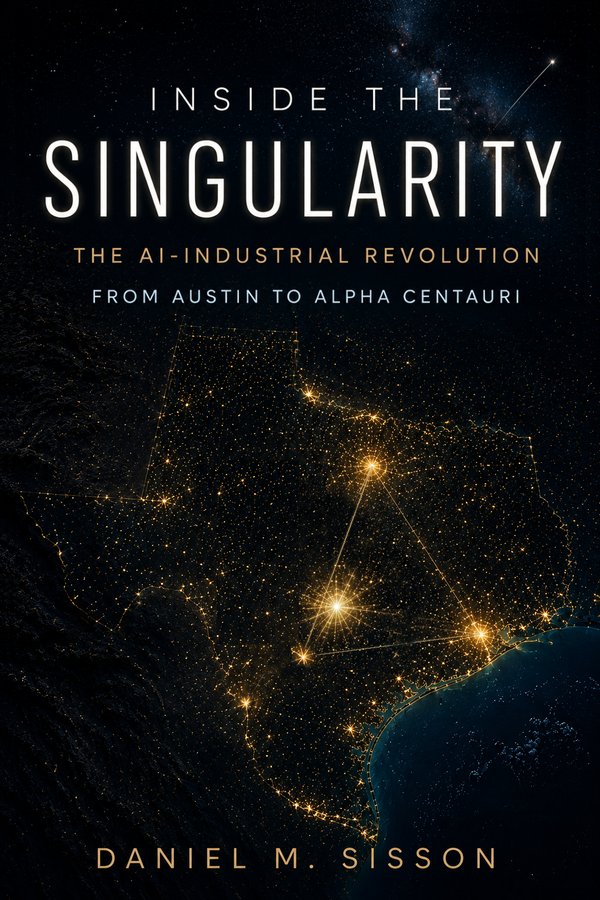
Inside the Singularity book cover

Daniel M. Sisson

Inside the Singularity

The AI-Industrial Revolution From Austin to Alpha Centauri. The book follows the buildout from Texas fabs and AI factories to compute in orbit. DatacentersX keeps the data center layer behind it current: the stack, the power and cooling, the supplier rings and the public argument over the pace.